Thursday, 14 March 2019

Oaths and Oath-Taking


Oaths and the taking of oaths, and the powerful, dramatic and formal ritual ceremony surrounding them have been undertaken since at least the time of the Ancient Greeks.

Oaths among many other matters govern behaviour in the courts, commerce when deals are being made, international relations between nations, and the signing of contracts and the making of enforceable promises between private parties.

Oaths may be taken secretly or before witnesses (necessary if they are to be proved in a court of law).

For an oath to be valid it must be made according to some proper or prescribed formula. There must exist a conventional procedure having a conventional effect.

In Ancient Greek times oaths were used in the tragedies and comedies by the dramatists to mark points in the drama where the plot changes direction here characters in that plot might be being compelled to act in ways not necessarily in their st interests or by their own moral conviction.

The taking of an oath might be considered to be an illocutionary act. That is an act where the very act of speaking it in itself constitutes the intended action.

The ritual behind the taking of an oath was pretty much fixed over time and place, a ritual very much traditional and stable in the society in which it is held..


Structure of an Oath

What did this ritual comprise?

1) The invitation and offer.

2) The invocation of God or the gods or other supernatural beings as witnesses and guarantors of the oath.

When making an oath it must attract the attention of the guaranteeing God or gods.

An oath is a kind of prayer to a God or gods, or a supernatural being to witness a promise or an assertion, and to enforce it.

Historically the taking of an an oath was a divinely ordained act and might be considered to be an illocutionary supernaturally protected ritual. In medieval times its sanctity was was sanctioned, aided and assured by God.

3) A verb of swearing.

4) The body of the promise or oath

5) The conditional curse. Every oath carries a conditional and implicit self curse.

It is a promise guaranteed by an invocation to God (or gods) and the offering of a self-curse if it is not kept or fulfilled, in the event if the promise is broken or perjured in any way.

6) Oaths sometimes include and involve details of the sacrifice and sanctifying ritual such as swearing on a bible or holy relic

In Ancient Egypt and Greece an oath was often made binding by a sacrifice on the altar of the witnessing and guaranteeing god

Consequences of keeping or not keeping an oath

Oaths bring success prosperity and triumph, and an honorable reputation to the pious man if they are honoured.

If they are perjured they bring destruction, excommunication and suspension to the individual who failed to fulfill the conditions. This is the very essence of pure tragedy. [traditionally perjury was the bearing of false witness or making a false oath.]

Documenting oaths

Documenting or the writing down an oath as text tends to have the effect of , i.e. encourages having the oath read out loud. Written language was always meant to be spoken. In earlier societies laws where most members of that society were illiterate, these societies always had a law-giver, someone who memorised and spoke the legal text of a law. The reading out loud of an oath made its content public.

Types of oath:

Evidentiary oath = swearing that the testimony that one is about to give is “true”.

Promissory oath = commitment to do or not to do something.


References

Judith Fletcher (2011). Performing Oaths in Classical Greek Drama. Cambridge University Press. ISBN 978-1-139-50035-7.

Alan H. Sommerstein; Judith Fletcher (2007). Horkos: The Oath in Greek Society. Bristol Phoenix Press. ISBN 978-1-904675-67-9.

Wilfred Lewis Warren (1973). Henry II. Henry II as Oathbreaker: University of California Press. pp. 217–. ISBN 978-0-520-02282-9.

Saints in Invocations and Oaths in Medieval Literature
Jan Ziolkowski
The Journal of English and Germanic Philology
Vol. 87, No. 2 (Apr., 1988), pp. 179-192
Published by: University of Illinois Press

CHEYETTE, FREDRIC L. "C." In Ermengard of Narbonne and the World of the Troubadours, 187-98. Ithaca; London: Cornell University Press, 2001. http://www.jstor.org/stable/10.7591/j.ctv3s8ngk.19.
https://goo.gl/RpQk8v

Godefridus J. C. Snoek (1995). Medieval Piety from Relics to the Eucharist: A Process of Mutual Interaction. Oath Taking on the Relics and the Eucharist: BRILL. pp. 132–. ISBN 90-04-10263-9.

Gaines Post (2006). Studies in Medieval Legal Thought: Public Law and the State 1100-1322. The Lawbook Exchange, Ltd. pp. 415–. ISBN 978-1-58477-692-5.

POST, GAINES. "THE ROMAN LAW AND THE “INALIENABILITY CLAUSE” IN THE ENGLISH CORONATION OATH." In Studies in Medieval Legal Thought: Public Law and the State 1100-1322, 415-33. Princeton University Press, 1964. http://www.jstor.org/stable/j.ctt183pr3p.13.

THE CORONATION IN MEDIEVAL ENGLAND: The Evolution of the Office and the Oath
H. G. RICHARDSON
Traditio
Vol. 16 (1960), pp. 111-202
Published by: Cambridge University Press
https://www.jstor.org/stable/27830405

The English Coronation Oath
H. G. Richardson
Speculum
Vol. 24, No. 1 (Jan., 1949), pp. 44-75
Published by: The University of Chicago Press on behalf of the Medieval Academy of America
DOI: 10.2307/2853920

Monday, 24 December 2018

The Palace of Clarendon

Clarendon Palace


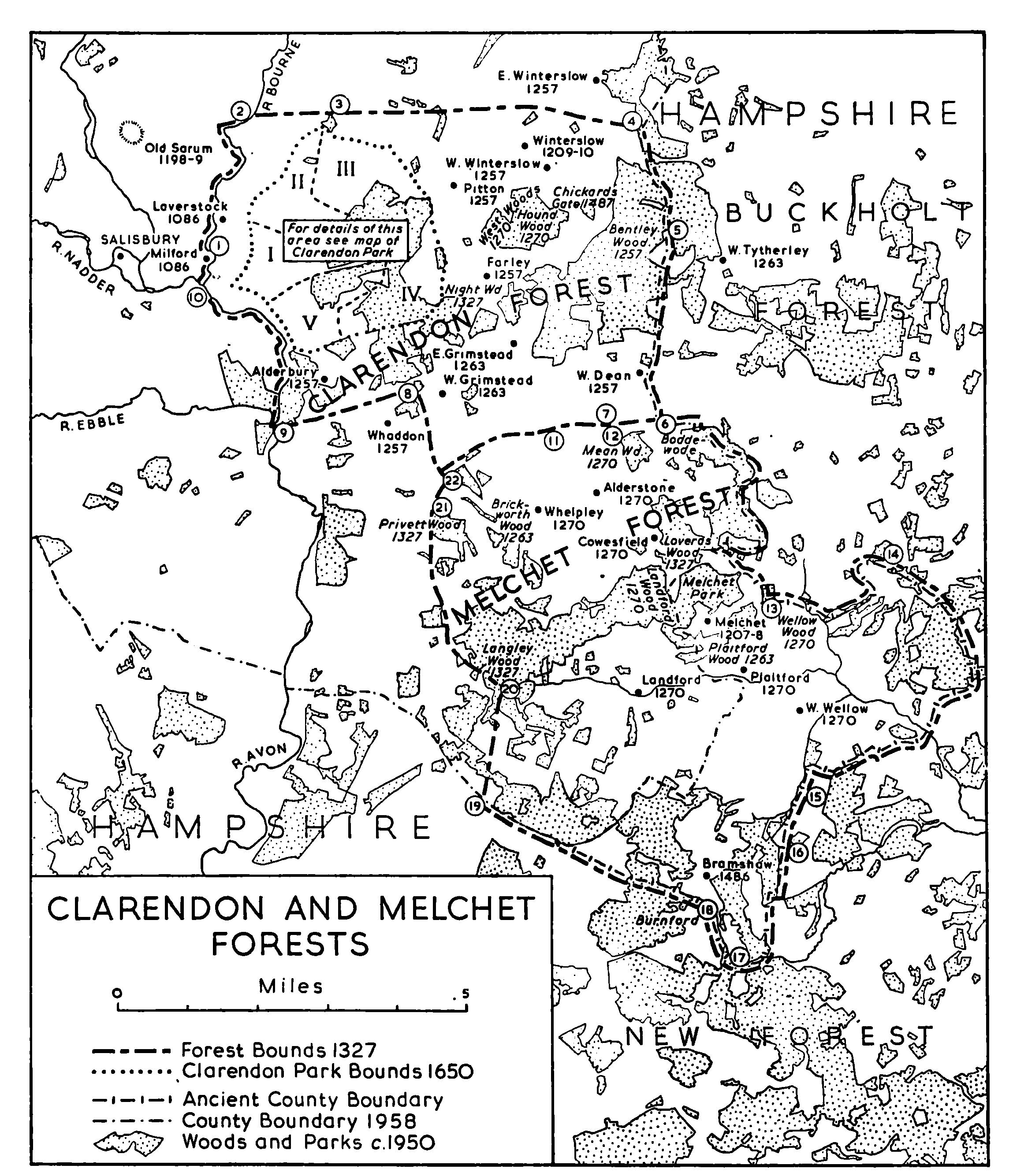
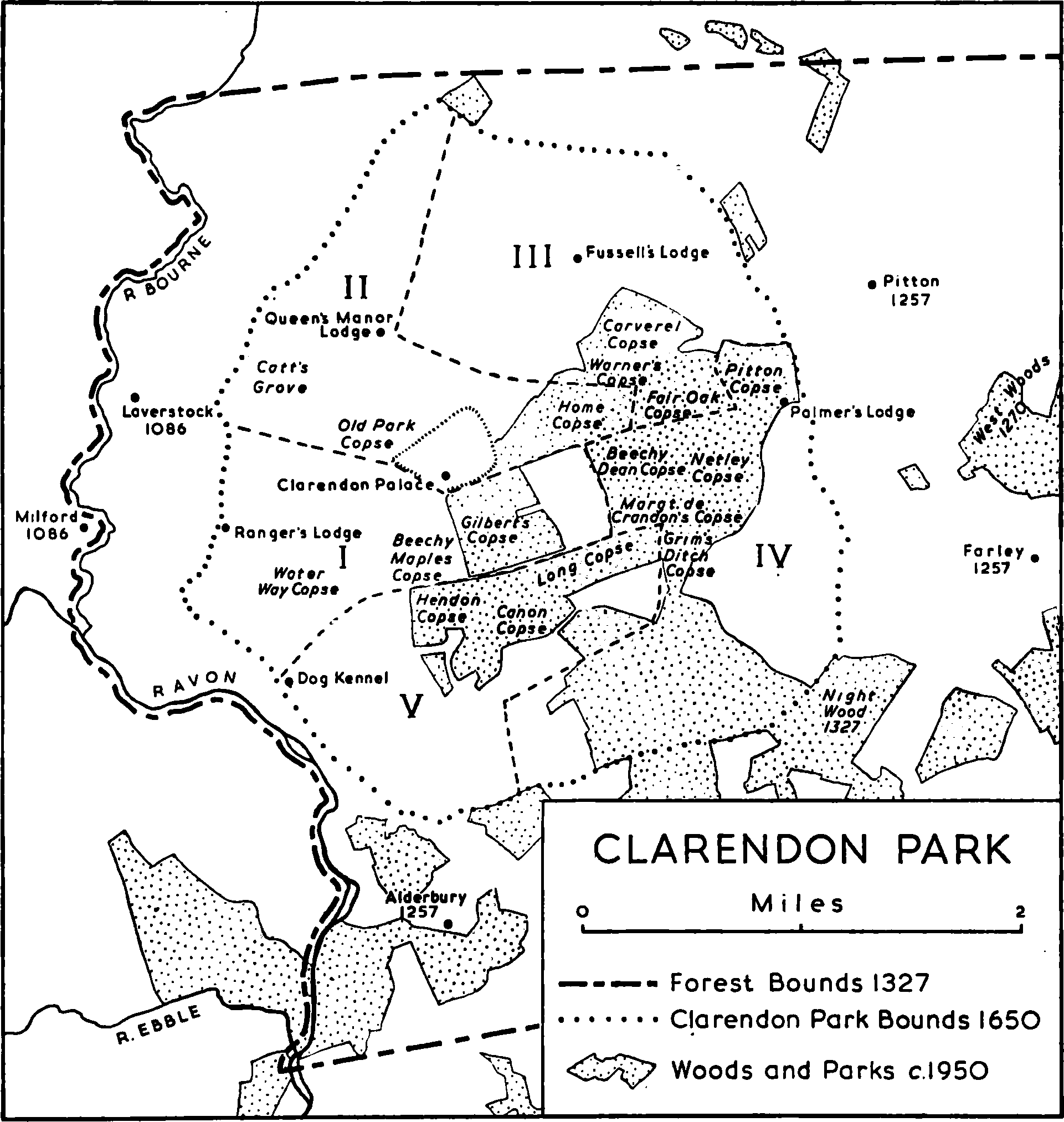
Clarendon Palace, the location where the Constitutions were drawn up and promulgated, a location very near to both Old Sarum [medieval Salisbury, about a 4 mile walk away]. Winchester was close by, and it was just about a day's ride from Southampton, and within 100 miles of London. It was selected for the convocation of the King's Grand Council most likely because of its huge deer park, and proximity to farm lands and store house necessary to be able to provision and feed all those summoned by the king to attend the Council, namely archbishops, bishops, abbot, earls, barons and others, and all their retinue and horses. It was originally a hunting lodge set in a royal forest, but gradually during Henry II's reign it was developing into a major palace with a Great Hall having several ancillary buildings for accommodation, kitchens, wine cellars and so forth; note it was not a castle but a palace, defensive works were minimal. Becket was known to be lodged in Winchester at the time of the Council of Clarendon, January 1164.

Wording on the plaque erected on the site by Sir Henry Hervey Bathurst, owner of the land in 1844:-

"The building of which this fragment formed a part, was long a favourite residence of the English monarchs, and has been historically connected with many important transactions and distinguished characters. Among others, Philip, king of Navarre, here rendered the first homage which was paid to Edward I as king of France; and John, king of France, with David, king of Scots, spent here a portion of their captivity. More especially here were enacted the Constitutions of Clarendon,—the first barrier raised against the claims of secular jurisdiction by the see of Rome. The spirit awakened within these walls ceased not to operate till it had vindicated the authority of the laws, and accomplished the reformation of the Church of England. To prevent the entire destruction of so interesting a memorial of past ages, sirF. H. H. Bathurst, bart., caused it to be supported and strengthened, and this inscription to be affixed, A.D. 1844." 


Photoset 1 https://flic.kr/s/aHskvPJgDL Clarendon Palace May 1st 2016

Photoset 2 https://flic.kr/s/aHskzmtYi3 Clarendon Palace May 1st 2016

Photoset Clarendon Palace June 2017 https://goo.gl/photos/mXmQMUJ5HJi4FKz49


T. B. James; Christopher M. Gerrard (2007). Clarendon: landscape of kings. Windgather. ISBN 978-1-905119-11-0. 

Anthony Emery (2007). Discovering Medieval Houses. Osprey Publishing. pp. 25–. ISBN 978-0-7478-0655-4.

Anthony Emery (2007). Discovering Medieval Houses. Osprey Publishing. pp. 33–. ISBN 978-0-7478-0655-4.
  
Chronology; or, A concise view of the annals of England: Wherein every particular occurrence from the descent of Julius Cæsar, to the present time ... is ... recorded, with the date affixed: also, an exact chronology of the lives of the most eminent men, in all ages of the world. To which is added a plan of the Saxon heptarchy .... J. Almon. 1769. pp. 86–.

William Stukeley (1776). Itinerarium curiosum; or, An account of the antiquities, and remarkable curiosities in nature or art, observed in travels through Great Britain. Printed for Baker and Leigh. pp. 4–

John Steane (2014). The Archaeology of Medieval England and Wales. Clarendon Palace (incl. Plan): Routledge. pp. 13–15. ISBN 978-1-317-59994-4.

John Steane (2003). The Archaeology of the Medieval English Monarchy. Routledge. ISBN 978-1-134-64158-1.


The Cycle of Images in the Palaces and Castles of Henry III
Tancred Borenius
Journal of the Warburg and Courtauld Institutes , Vol. 6, (1943) , pp. 40-50

Tancred Borenius and John Charlton (1936).
Clarendon Palace: An Interim Report.
The Antiquaries Journal / Volume 16 / Issue 01 / January 1936, pp 55-84

Nikolaus Pevsner; Bridget Cherry (1975). WiltshireClarendon Palace: Yale University Press. pp. 180–. ISBN 978-0-300-09659-0.

The Gentleman's Magazine. F. Jefferies. 1833. pp. 142–.

"Survey of the Manor and Forest of Clarendon" by Phillipps"Archaeologia:. Society of Antiquaries of London. 1834. pp. 151–8.


Peter Hall (1834). A brief history of Old and New Sarum. pp. 30–.


The Parliamentary Gazetteer of England and Wales A. Fullarton and Company. 1841. pp. 458–.

Archaeologia ; Or, Miscellaneous Tracts Relating to AntiquitySurvey of the Manor and Forest of Clarendon, Wiltshire, in 1272.: Society of Antiquaries of London. 1833. pp. 151–.


T. B. James; Anne M. Robinson; Elizabeth S. Eames (1988). Clarendon Palace: the history and archaeology of a medieval palace and hunting lodge near Salisbury, Wiltshire. Society of Antiquaries of London. ISBN 978-0-85431-248-1.


T. B. James; Christopher Gerrard (2007). Clarendon: landscape of kings. Windgather. ISBN 978-1-905119-10-3.

John Nichols (1833). The Gentleman's Magazine. Survey of the Manor and Forest of Clarendon, Wilts.: E. Cave. pp. 142–.


Journal of the British Archaeological Association. British Archaeological Association. 1859. pp. 203–.

Historic England Clarendon Palace https://goo.gl/Ni6cor 

Clarendon Palace - Revolvy 


More images

http://www.british-history.ac.uk/sites/default/files/publications/pubid-1056/images/fig13.gif
fig13.gif (GIF Image, 2332 × 2669 pixels) - Scaled (23%) - http://bit.ly/1SG3dBd


http://www.british-history.ac.uk/sites/default/files/publications/pubid-1056/images/fig14.gif
fig14.gif (GIF Image, 1921 × 2026 pixels) - Scaled (31%) - http://bit.ly/1SG3BiS
 

SU1830 :: Browse 18 Images :: Geograph Britain and Ireland

Roman roads and other historic routes in vicinity of Clarendon Palace

Roman Roads in Britain by Thomas Codrington
Port-Way

Roman Road Hub at Calleva [Silchester]

Port-Way

Devil's Highway

Iter Britanniarum

Iter XV [2 Kms from Clarendon Palace]
Venta Belgarum [Winchester] <> Brige [Broughton] <> Sorbioduni [Old Sarum]
Antonine Itinerary for Britain [ Iter Britanniarum]

Monarch's Way
Modern access to Clarendon Palace is via footpath known as The Clarendon Way

Sunday, 9 December 2018

Garnier Life of St. Thomas Becket Chapter List


Prologue                                                                                           Stanzas 1-33

Becket's Early Life                                                        Stanzas 34-79

Election to the Archepiscopacy                                                        Stanzas 80-119

Obtaining the Pallium                                                                       Stanzas 120-128

Fetching Becket's Pallium from the Pope, July 1162            Stanzas 120-128


Council of Woodstock                                                      Stanzas 151-154

Case of Philippe de Broï                                                   Stanzas 155-
165

Councils of Westminster 1163 and Clarendon 1164                         Stanzas 166-207

Council of Clarendon January 1164                                                  Stanzas 185-209

John of Oxford's and Geoffrey Ridel's mission to the Pope              Stanzas 210-221

On Criminous Clerics                                                                         Stanzas 222-284

Court Case - John the Marshal v. Thomas Becket          Stanzas 277-292

State Trial of Becket at Northampton (Anglo-Norman)      Stanzas 293-397

State Trial of Becket at Northampton  (English)                         Stanzas 293-397

Becket's Flight into Exile                                                                    Stanzas 398-447

King's Delegation meets with the Pope                                            Stanzas 448-466

Becket in the Presence of the Pope at Sens                                      Stanzas 467-478


Henry's Anger at Thomas's Flight                                                     Stanzas 513-545

Peter's Pence                                                                             Stanzas 546-549

Coronation of the Young King                                                  Stanzas 550 - 556

Introduction to the Letters                                                              Stanzas 557-569

Garnier: Letter Becket to King Henry II, (Exspectans exspectavi)                  Stanzas 570-608

Becket to King Henry (Desiderio desideravi)                          Stanzas 609-636

Letter from the Bishop of London to Becket (Quae vestro)            Stanzas 637-664


Garnier on Custom                                                                                        Stanzas 714-722

Life of Thomas at Pontigny                                                              Stanzas 723-760

Becket at Sens                                                                           Stanzas 750-796

Attempts at Reconciliation                                                      Stanzas 797-814

Conference at Montmirail January 1169                                   Stanzas 815 -843

Reconciliation with King Henry at Fréteval                                        Stanzas 841-888

Meeting of Becket with King Henry at Tours                                     Stanzas 889-917

Becket Prepares to Leave for England, 11...                                       Stanzas 917-943

Becket's Return from Exile, December 1170.                             Stanzas 943-953

Becket tries to see the Young King                                            Stanzas 954 - 989

Christmastide 1170                                                                    Stanzas 990-1032

Becket's Martyrdom 29th December 1170                                Stanzas 1033-1131

Events Immediately After the Murder of Becket                              Stanzas 1132 -1171

Miracles, Pilgrimages and Souvenirs                                                Stanzas 1172 - 1182

Master Fermin's Vision and Epilogue                                               Stanzas 1219-1236

Postscript, on Becket's Sister


Jenkins, T. A. (1924). [Review of La Vie de Saint Thomas le Martyr par Guernes de Pont-sainte-Maxence. Poème historique du Siècle (1172-1174)]. Modern Philology, 21(4), 439–441. http://www.jstor.org/stable/433610


Garnier: Henry's Anger at Thomas's Flight


Extract from
http://txm.ish-lyon.cnrs.fr/bfm/pdf/becket.pdf
https://goo.gl/xyem88
Stanzas 513-545
Lines 2561-

513
Or vus ai fait ici mult grant digressiun,
Car ne voil en l’estoire fere corruptiun.
Or m’estuet revenir ariere a ma raisun,
La u li sainz s’en fu fuïz de Northantun ;
2565 E que li reis en fist metrai en mun sermun.

514
Quant ot li reis Henris l’arcevesque s’en fuit,
Durement s’en marri, e si conseillier tuit.
Tuz les porz funt guaitier e de jur e de nuit,
Qu’il n’i puisse passer od plain chalant n’od vuit.
2570 Mais pur neent le fait, car Deus l’en ad conduit.

515
Quant nel poent trover en trestut’Engleterre,
Ne trover nel purrunt, s’a Sanz ne l’augent querre,
Sun mautalent e s’ire li reis mustre e desserre.
As parenz saint Thomas ad prise si grant guerre
2575 Que tuz les fist chacier hors de tute sa terre.

516
Tuz les en fist chacier, e hummes e muilliers,
Les clers enpersonez, burgeis e chevaliers,
Od filles e od fiz, od enfanz laiteniers.
Tut saisi en sa main, e terres e mustiers,
2580 E vif aveir e mort, blé, rentes e deniers.

517
Tute l’arcevesquié aveit il nis saisie,
En rentes e en fius, en autre manantie ;
E a Randuf del Broc l’a livree en baillie,
[80] Qui tute a l’ués le rei ad la rente cuillie.
2585 Del tut n’en pout aveir li sainz une demie.

518
De rien n’i pout aveir li sainz hum recovrier ;
Ne nuls de tuz ses clers n’i osa repairier,
Ne nuls des suens n’i out a beivre n’a mangier,
Ainz les ad fait li reis fors del païs chacier.
2590 Tut ad pris a sun ués tresqu’a un sul denier.

519
Ensi en sunt chacié li parent saint Thomas.
Vunt en autre païs dolent, chaitif e las,
E portent lur enfanz, lur robes e lur dras.
Veir se dit li vilains que « de si haut si bas » :
2595 Ainceis erent manant, or n’en i ad nul cras.

520
Li arcevesques sist un jor a sun mangier.
Sis mareschals li vint la novele nuncier
Que li reis out tut fait sun lignage esseillier :
Ainz tierz di en avreit plus d’un cent tut entier.
2600 Mais pur Deu l’en priout ne s’en volsist irier.

521
« Guilaume, se veïsse, fait li il, detrenchiez
Serganz pur ceste cause, e parenz eschorchiez,
E serurs e neveuz, n’en sereie esmaiez.
Car a seür sereie e bien certefïez
2605 Que salvé les avreit la divine pitiez. »

522
Ne pout en lui diables de nule part entrer.
Fait l’out de grant richesce e del païs jeter ;
Par sa char le voleit e par sun sanc trubler :
Par nul ennui ne pout sun esperit muer.
2610 Tut le mal qu’il suffri ne vus puet nuls mustrer.

523
Quant li sainz veit venir les suens a lui fuitiz,
E les enfanchunetz pendre as meres as piz,
E que lui e les suens aveit li reis proscriz,
Mielz volsist estre morz, mult fort est amatiz.
2615 Mais en Deu prent confort e es devins escriz.

524
Prist guarde a Habraam, a qui Deus comanda
Que de sa terre eissist ; e li bers s’en ala,
Guerpi ses conissanz, sa femme od sei mena.
Li reis pur sa beauté li toli e roba :
2620 Sauvement li rendi Deus e mult l’eshauça.

525
De Joseph li sovint, qui si altre noef frere
Vendirent pur deniers, e distrent a lur pere
Que devorez esteit d’icele beste fere.
Puis fu il en Egipte asez plus qu’enperere,
2625 E guari ses parenz de la famine amere.

526
E de l’enfant Jesu se prist a recorder,
Que li angles del ciel fist en Egypte aler
Pur la poür d’Erode, qui dunc fist decoler
Les enfanz de dous anz ; car Deu quida tuer.
2630 Mais es enfanz ne sout la deïté trover.

527
En teus essamples s’est granment reconfortez.
Mais nepurquant mult ert el corage trublez,
Quant essilliez esteit pur lui sis parentez ;
Kar pas n’aveit granz fius ne autres heritez
2635 Qu’il lur peüst duner ; tant fu plus esguarez.

528
En l’essil nepurquant li ad bien esteü :
Car li reis Loëwis l’a del tut maintenu,
Lui e les suens trové quanque mestier lur fu ;
E li barun franceis le runt tant succuru,
2640 Bien pout aidier as suens qui la furent venu.

529
Quant ot li reis Henris de la pape conter
Qu’il feseit par ses briefs les evesques mander,
A Clarendune ad fait sun concilie asembler.
Iluec voleit il faire as evesques jurer
2645 Que nul d’els pur apel ne passereit mais mer,

530
E qu’a pape Alissandre de rien n’obeïreient,
Ne pur ses mandemenz nule rien ne fereient,
Ne que nul de ses briés des or ne recevreient,
N’a Thomas ne as suens de rien nen aidereient.
2650 Il ne l’unt pas juré, mais ensi l’otrieient.

531
Li lai en furent mis par tut al serement.
(Rome est a Evrewic, Rogier a trop argent ;
Cil ad Angot od lui, dunc ad Rome en present !
Engleterre est enclose e de mer e de vent :
2655 Ne crient Deu ne ses sainz par un poi de turment.)

532
Encore aveit li reis comandé e bani
Que, s’en tute sa terre eüst clerc si hardi
Qui a Rume apelast, a l’ués le rei Henri
Sereient erramment tuit si chatel saisi
2660 E il mis en prisun, cum s’il eüst mal cri.

533
Tuit apeleient dunc la presence le rei,
Plaidouent en sa curt ; n’i aveit mot de lei.
Traitié erent iluec povre clerc a beslei,
Car l’iglise en porteit li riches ovec sei.
2665 Bien puis dire pur veir ço que jo oi e vei.

534
E li deniers saint Piere fu dunkes retenuz,
Si fu a l’eschekier e portez e renduz ;
Li rivages de mer guaitiez e purveüz :
Se nuls aportast brief, e fust aparceüz,
2670 Qui de Rume venist, tost fust pris e penduz.

535
Mais pluisur en i vindrent par le comandement
L’apostolie Alissandre, mais mult celeement,
Qui aporterent briefs, tel de castiement
De ço que li prelat errouent malement,
2675 Tel de suspensiun e tel de damnement.

536
Dunc manda saint Thomas ses evesques par cunte.
Nul d’els n’i volt aler fors Rogier, fiz le cunte.
Erramment passa mer senz cungié de vescunte ;
Ne fist a sun primat n’a saint’iglise hunte.
2680 Set anz fu en eissil ; mult enprunta a munte.

537
Or oez les capitles que li reis enveiad
As bailliz del païs ; e sis i aportad
Vualters de Grimesbi (li escriz le numad),
Vuimuns li chapelains, qui od li i alad.
2685 Tost vus avrai conté ço que escrit i ad :

538
Se nuls brief el païs de la pape aportast,
U que li arcevesques Thomas i enveiast,
Qui la cristïenté defendist ne veast,
Qu’il fust erramment pris e que l’um le guardast,
2690 Desque li reis Henris sun voil en commandast.

539
Se clers, muines, chanuines u convers passast mer,
Le brief a la justise l’en estuveit porter ;
E se nuls revolsist en Engleterre aler,
Le brief le rei portast qu’il volsist la passer.
2695 Senz ço le fesist l’um prendre e enprisuner.

540
Ne nuls nul mandement ne tenist ne guardast
Que pape u l’arcevesque Thomas i enveiast ;
Ne nuls lur mandement el païs n’aportast.
E se nul od tel brief clerc u lai encontrast,
2700 Qu’il fust pris erramment e qu’um l’enprisunast.

541
Se pape u l’arcevesque nului entredesist,
Se evesques u abes lur sentence tenist,
Clers u lais ensement, hors del païs fuïst
Od trestut sun lignage, k’un sul n’i remasist ;
2705 Rien n’eüssent del lur, mais li reis tut presist.

542
Li clerc qui orent rentes e lur possessiuns,
Qu’en chascune cunté fuissent treis feiz sumuns :
Se repairier volsissent as rentes n’as maisuns,
Ariere revenissent dedenz treis luneisuns,
2710 U tuz dis remansissent mais en chaitivesuns ;

543
Tut lur aveir avreit tresqu’a un sul denier
Li reis. – Car pur ço out fait cel ban denuncier,
Que li clerc saint Thomas n’osouent repairier ;
E par cele sumunse les voleit esluignier
2715 E a tuz dis del tut proscrire e essillier. –

544
Li evesques de Lundres e cil de Norewiz
Fuissent sumuns a dreit, ço ruva li escriz,
Par devant les justises que li reis out esliz,
Par quel raisun quens Hue ert par els entrediz
2720 Sur decrez que li reis out el regne establiz.

545
– Veez cum grant dolur, quel mort e quel juïse
Suffreit a icel tens la sainte mere iglise :
Que sa dreiture faire n’osout ne sa justise ;
E s’ele le fesist, la venjance en fust prise.
2725 Pur les dreiz sa mere a li fiz sa teste mise. –