Thursday, 4 September 2014

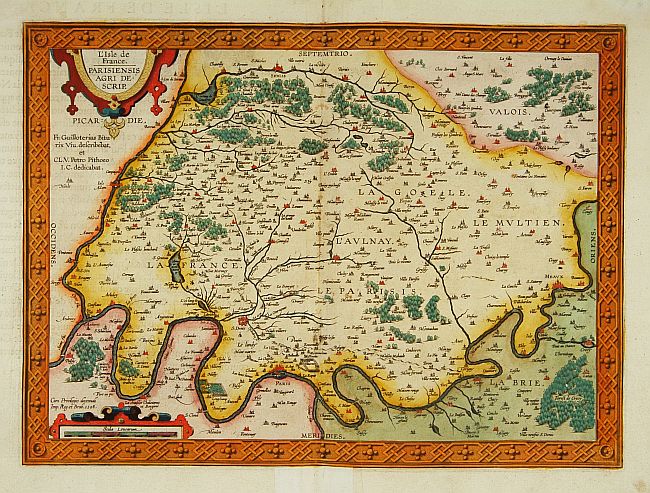
Map of Isle de France

Pays de France


Zoomable Version: http://www.swaen.com/zoomV3.php?id=1550&referer=item.php

Île-de-France Historique


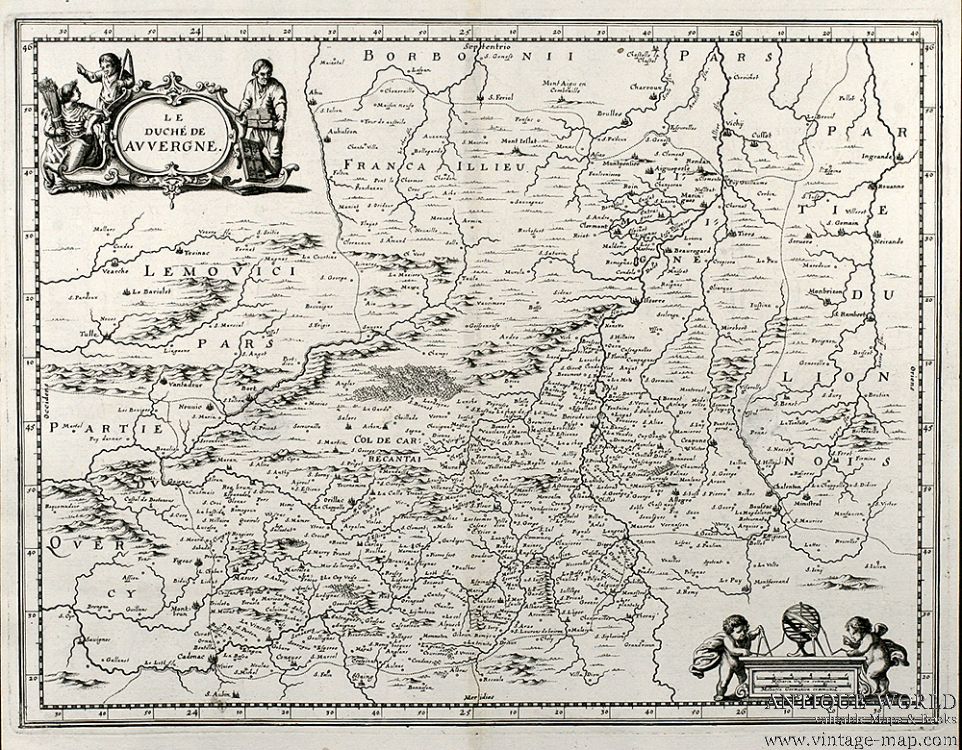
Map of Auvergne


Auvergne


Add caption


Zoomable Version: http://gallica.bnf.fr/ark:/12148/btv1b7710555j/f1.highres


Auvergne

http://fr.wikipedia.org/wiki/Liste_des_dauphins_d'Auvergne
http://fr.wikipedia.org/wiki/Liste_des_comtes_d'Auvergne
http://fr.wikipedia.org/wiki/Guillaume_VII_d'Auvergne
http://fr.wikipedia.org/wiki/Guillaume_VIII_comte_d'Auvergne

http://goo.gl/qaJRJ7


Guillaume VII le Jeune, Comte d'Auvergne, the rightful heir, succeeded his father Robert III later in 1145. He went on crusade with King Louis VII <<le Jeune>> returning in 1149. In 1155 Guillaume VIII, named The Old <<Le Vieux>>, his uncle, and brother of his father Robert III, dispossessed him of the greater part of his estates. The nephew sought the help of Henry II, King of England, whom he regarded as his liege lord, as Duke of Aquitaine. The uncle was supported by Louis VII <<le Jeune>>, to whom he did homage for his conquests. The two Princes drew up a partition treaty: the heirs of the uncle retained the titles of Comtes d'Auvergne; the nephew's line took the title of the Dauphins d'Auvergne, though never used by Guillaume,who retaining the Velay, called himself Comte du Puy.

Guillaume VII le Jeune, was sometime known as Arverniæ comes. His share of the partitioned lands left him with Rochefort-Montagne, Pontgibaud, Herment, Saint-Germain-Lembron, Champeix, de Vodable.

Guillaume VIII, after he had exercised extreme violence against the Church of Saint Julien de Brioude, Louis VII sent an army against him, capturing him and his son Robert, after a complaint had been made to him by the dean of the Saint-Julien Brioude. In Mid 1163 King Louis VII led an incursion into Auvergne and captured both Guillaume VIII and his nephew Guillaume VII. The Duke of Aquitaine, who was also the King of England Henry II , and the immediate overlord of both the Counts of Auvergne, complained to the King of France of the arrest of his vassals and said they should be released, which happened in 1164 after they both vowed not to bother the Church again.

Étienne Baluze (1708). Histoire généalogique de la maison d'Auvergne justifiée par chartes, titres, histoires anciennes et autres preuves authentiques, par Monsieur Baluze. chez Antoine Dezallier. pp. 17–.

Étienne Baluze (1708). Histoire généalogique de la maison d' Auvergne: justifiée par chartres, titres, histoires anciennes et autres preuves authentiques. Guillaume VII Comte d'Auvergne: Antoine Dezallier. pp. 61–.

Étienne Baluze (1708). Histoire généalogique de la maison d' Auvergne: justifiée par chartres, titres, histoires anciennes et autres preuves authentiques. Guillaume VIII Comte d'Auvergne: Antoine Dezallier. pp. 66–.

Velay was then a separate Comté from the Auvergne. In 1162,  Guillaume VIII <<Le Vieux>>, who was Comte de Velay en Puy, and his nephew Guilaume VIII, Comte d'Auvergne, and the Viscomte de Polignac engaged in banditry against the possessions of the bishops of Puy and Clermont. The three princes then sided with Henry Plantagenet, King of England, who was jousting with Louis VII for possession of  the Aquitaine. Their actions served as a pretext to the King of France for armed intervention. At the request of the clergy of Auvergne and Velay, he declared war against them, and defeated them in 1163 making them prisoners. What was then the fate of the Comté of Velay? It seems that the king then confiscated the Comté de Velay from Guillaume <<Le Vieux>> to join it to the lands of the bishops of Le Puy.

Henry Plantagenet intervened, in fact, later in favor of these three earls who had been captured by Louis VII; he called them "comités de Alvernia" and claimed he was their defender, and considered Auvergne and Velay as fiefs mouvants (transferrable fiefs) of his duchy of Aquitaine.

Bernard de Montfaucon (1730). Les monumens de la monarchie françoise qui comprennent l'histoire de France. chez Julien-Michel Gandouin. pp. 59–.

1162-63 
...
King Louis always attentive to suppress injustice and violence, several lords of this neighborhood, learned that the Comte de Clermont, his nephew, the Comte of Puy, and Viscomte de Polignac had ravaged the lands  neighboring their territories, pillaging the churches, robbing the travellers, oppressing the poor. The Bishops of Puy and Clermont took their complaints to the Prince [King Louis], who went in first with an army. He undid their troops, took their castles, and captured these Lords, and held them as long term prisoners releasing them only after making them promise not to exercise violence.
...

Michael Wolfe (15 August 2009). Walled Towns and the Shaping of France: From the Medieval to the Early Modern Era. Palgrave Macmillan. p. 23. ISBN 978-0-230-60812-2.
April 1167
...
Henry II went on the offensive against Louis VII in 1167 when he marched an army into Auvergne where he claimed several lordships.
...

George Lyttelton (1st baron.) (1773). The history of the life of king Henry the second. Volume 6 pp. 89–.

AD. 1177 Louis VII of France Henry II of England met to discuss Auvergne
...
About the feast of St. Martin, Louis and Henry met again, to conclude another controversy concerning the feudal dependance of Auvergne, which, with that of Chateauroux and some smaller fiefs in Berry, had, by virtue of a clause in the late convention between them, been left to the decision of three bishops and three barons named therein by each king, who were to enquire by themselves, and by the oaths of the principal men of those countries, into the rights of each claimant. All the nobles of Auvergne were summoned to this meeting; and Henry asked, them, what right his predecessors, dukes of Aquitaine, had in Auvergne. They unanimously answered, that the whole province, except the bishoprick of Clermont, which belonged to the patronage of the king of France, had been subject, from old times, to the government of those princes. But Louis not being satisfied with this affirmation, the twelve arbitrators were directed to make a further enquiry, and both monarchs agreed to acquiesce in their verdict, which they swore to give without favour. This deserves observation, as it shews that inquisitions upon the oaths of twelve men were used in France at this time.
...

W. L. Warren (1977). Henry II. University of California Press. pp. 101–. ISBN 978-0-520-03494-5.

W. L. Warren (1977). Henry II. University of California Press. pp. 105–. ISBN 978-0-520-03494-5.

W. L. Warren (1977). Henry II. University of California Press. pp. 145–. ISBN 978-0-520-03494-5.

Map of Maine (France)


Map of Britanny

Nolin: Carte de Duche de Bretagne


Zoomable Version: http://gallica.bnf.fr/ark:/12148/btv1b7710201z/f1.zoom.langEN


References


Map of Poitou

Map of Poictou
Map of Poictou


Map of Anjou

Anjou

Henry II is Comte of Anjou and Seneschal of France.

The political origin of Anjou is traced to the ancient Gallic state of the Andes. The Comté of Anjou is practically identical with the ecclesiastical diocese of Angers.

Anjou - Touraine
References

Josèphe Chartrou Charbonnel (1928). L'Anjou de 1109 à 1151: Foulque de Jérusalem et Geoffroi Plantegenêt. impr.-édition les Presses universitaires de France, 49, boulevard Saint-Michel. (S.M.).
 

Map of Normandy

From Powicke: Loss of Normandy

Cassini Map of Bayeaux 1760 http://bit.ly/1pX8064

Le Duché et Gouvernement General de Normandie. 1708 http://bit.ly/1pwAEKT 

http://bit.ly/1pwALGk


North France in 1066

In 1150, Geoffrey made Henry the Duke of Normandy and Louis responded by putting forward King Stephen's son Eustace as the rightful heir to the duchy and launching a military campaign to remove Henry from the province.

Henry's father advised him to come to terms with Louis and peace was made between them in August 1151 after mediation by Bernard of Clairvaux.

Under the settlement Henry did homage to Louis for Normandy, accepting Louis as his feudal lord, and gave him the disputed lands of the Norman Vexin; in return, Louis recognised him as duke

The Duchy of Normandy was originally coterminous with the ecclesiastical province of Rouen.


Jean-François Lemarignier.
Review of
Recherches sur l'hommage en marche et les frontières féodales
By Foreville Raymonde
Revue d'histoire de l'Église de France
Year 1949 Volume 35 Issue 126 pp. 228-230
http://www.persee.fr/web/revues/home/prescript/article/rhef_0300-9505_1949_num_35_126_3080_t1_0228_0000_2

...
We know that in Normandy more than in other major strongholds, ducal power emerged very early on in almost all of its territory. This is due to the greater age of the Duchy (set in its own boundaries in the first half of the tenth century); it also retaans its character with a clearly defined border, Norman, because it corresponds to the boundaries of the old pagi which were modeled on ecclesiastical jurisdictions. The Duchy of Normandy coincides with the ecclesiastical province of Rouen, except in some areas such as the shared Méresais (lying between the dioceses of Evreux and Chartres), the latter region constituting the counties of Belleme and Mortagne, which under influences at the end of the twelfth century, the movement was back to the crown. More difficult was the situation in the Vexin, bisected by the political boundary of the Epte, while yet under the jurisdiction of the diocese of Rouen. The conflict and opposition between the duke and the king for possession of the Vexin had its effect on ecclesiastical matters. The archbishop of Rouen was in the gift of the Duke and like all the Norman bishops, he was very loyal, especially where distrust of the king of France was against him. Louis VII, supported by Suger, spread deliberately in the Vexin Francais rumours about the archbishop. And  he had churches transferred to the abbey of Saint-Denis including the privilege of jurisdiction (as in the case of Chaumont) or he turned the representative of the archbishop, his archdeacon into a royal function. into a fiefdom of the crown (as had been done in Pontoise) thereby reconciling the requirements of canon law with the requirements of policy. ..  The Vexin Francais escaped the jurisdiction of the archbishop of Rouen.

Notes 

There was no automatic connexion or right of inheritance to the Duchy of Normandy by the king of England. True, William I had first been Duke of Normandy, claimed England as his inheritance, and used the wealth of the Duchy of Normandy to effect and win that invasion. After he died he gave the Duchy to  his eldest son, Robert Curthose, and England to his second son, William Rufus.

Robert went on the First Crusade in 1096 leasing Normandy to William Rufus as regent for a mortgage of 10,000 marks to fund his campaign. William Rufus later in 1100, died in a highly suspicious hunting accident in the New Forest: many have argued that he was murdered. Henry Beauclerc [later Henry I], the Conqueror's youngest son, who was present at the time saw his opportunity and seized the throne of England being crowned soon after an d taking over the regency of the Duchy. In 1106 Robert returned from crusading intending to marry a wealthy lady and to pay his brother back for the loan. He tried unsuccessfully to seize England. Afterwards he campaigned against his younger brother in Normandy. Henry defeated Robert's army decisively at the Battle of Tinchebray and claimed the Duchy formally as a possession of the English crown, a situation that was to last for almost a century. Captured after the battle, Robert was imprisoned first in Devizes Castle for twenty years and then later  moved to Cardiff, where he was to die in captivity.


...

References

Daniel Power (2004). The Norman Frontier in the Twelfth and Early Thirteenth Centuries. Cambridge University Press. pp. 1–. ISBN 978-0-521-57172-2.

Normandy, France and the Anglo-Norman Regnum
Author(s): C. Warren Hollister
Source: Speculum, Vol. 51, No. 2 (Apr., 1976), pp. 202-242
Published by: Medieval Academy of America
Stable URL: http://www.jstor.org/stable/2854261

Maurice Powicke (1999). The Loss of Normandy: 1189 - 1204 ; Studies in the History of the Angevin Empire. Manchester University Press. ISBN 978-0-7190-5740-3.

David Bates; Anne Curry (1994). England and Normandy in the Middle Ages. A&C Black. ISBN 978-1-85285-083-8.

Sir Francis Palgrave (1851). The History of Normandy and of England: General relations of mediaeval Europe, the Carolovingian Empire, the Danish expeditions in the Gauls, and the establishment of Rollo. Volume I. J.W. Parker.

Sir Francis Palgrave (1857). The History of Normandy and of England: The three first dukes of Normandy: Rollo, Guillaume-Longue-Épée, and Richard-Sans-Peur. The Carlovingian line supplanted by the Capets. 1857. Volume II. Macmillan and Company.

Sir Francis Palgrave (1864). The History of Normandy and of England: Richard-Sans-Peur. Richard Le-Bon. Richard III. Robert Le-Diable. William the Conqueror. 1864. Volume III. J. W. Parker and son.

Francis Palgrave (1864). The History of Normandy and of England: William Rufus, accession of Henry Beauclerc. Volume IV. Parker.

The History of Normandy and of England. Volume IV. CUP Archive. pp. 7–
Ordericus Vitalis; Guizot (François, M.); Léopold Delisle (1853). The ecclesiastical history of England and Normandy. Volume 1. H.G. Bohn.

Orderic Vitalis,; Marjorie Chibnall (3 March 1983). The Ecclesiastical History of Orderic Vitalis: Volume II: Books III & IV. Clarendon Press. pp. 3–. ISBN 978-0-19-822204-0.